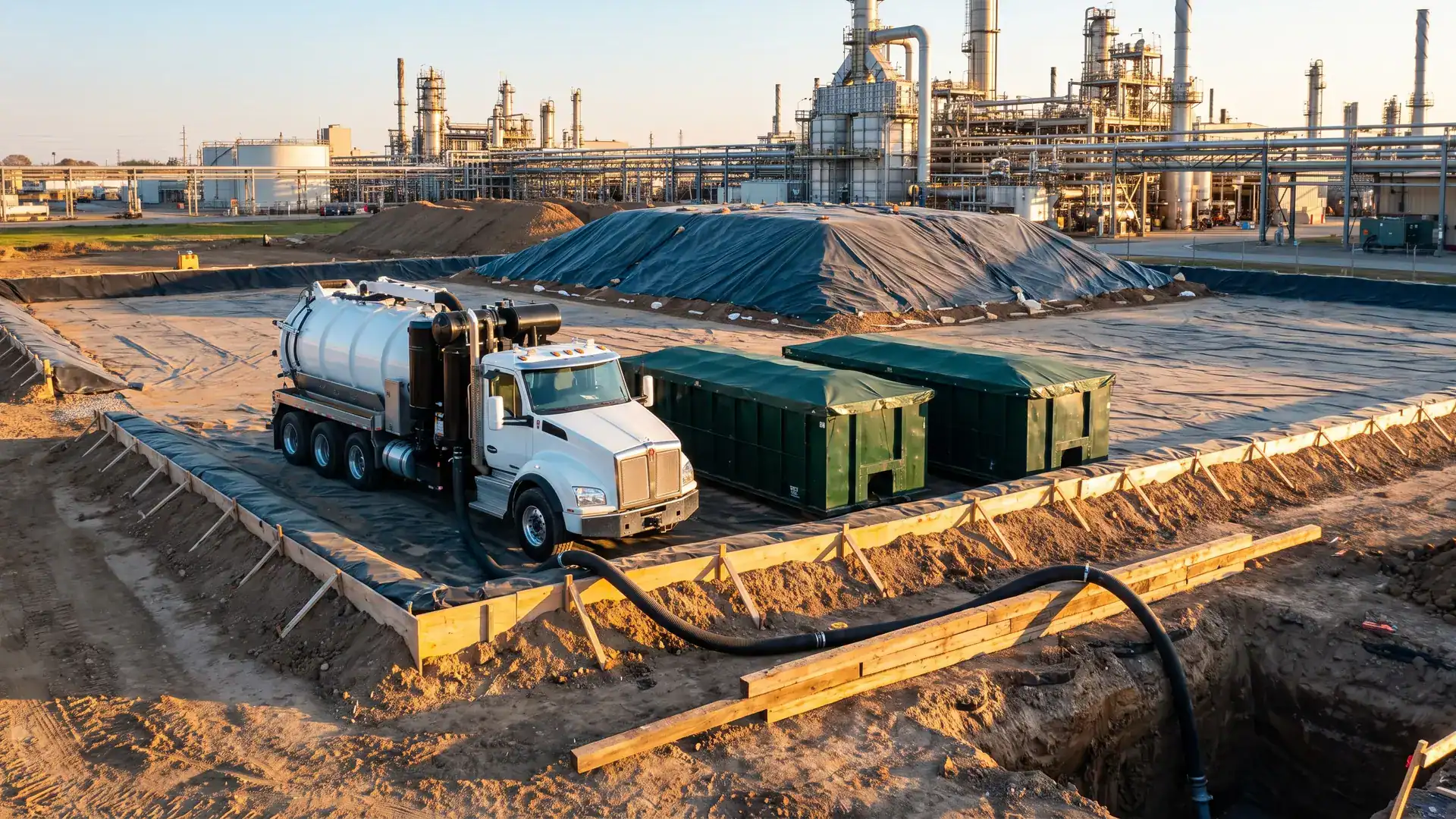
Remediation at an Operating Plant Does Not Have to Stop Production
The cleanup has been ordered. Maybe it was a spill, maybe an old release found during a property review, maybe contaminated soil turned up when a new foundation was dug. Whatever started it, the environmental manager now has work that has to happen, and the plant manager has production commitments that cannot stop while it does.
Those two jobs pull in opposite directions. The instinct is to schedule remediation for the next shutdown, but a lot of cleanups cannot wait that long, and some sites do not have a shutdown coming at all. Remediation at an operating plant is the realistic answer for many facilities, and it is far more manageable than it first appears.
Waiting has its own cost. An open cleanup sits on the environmental manager’s desk, in the insurer’s file and sometimes on a regulator’s calendar, and the longer it stays open, the harder it is to explain why production came first. Finding a way to do both is usually the least expensive outcome for the plant.
The plants that handle it well treat it as a scheduling problem first and a technical problem second. That is especially true at chemical plants and process facilities, where the operating area right next to the cleanup is often the part of the site that can least afford a disruption.
Hill Services runs remediation as part of its industrial and environmental services, alongside the vacuum, hydro blasting and waste work that usually goes with it. The pieces that a cleanup depends on come from one contractor instead of four.
Keeping the Cleanup and the Plant Apart
Everything about remediation on a live site starts with separation. The work area has to be kept apart from the operating area, physically and in terms of drainage, so that cleanup activity does not spread into production and production does not interfere with the cleanup. Air matters too. Dust and vapor from open ground have to stay inside the work area, which shapes how material is covered, stockpiled and loaded out.
What that looks like on the ground:
- A contained work area. The section being remediated is set off from the rest of the site, with its own access and its own drainage, so runoff and spoil stay where they belong.
- An assessment and removal plan before digging. An onsite safety representative assesses the area and lays out how contaminated material will be removed, separated and handled.
- Material handled from removal to disposal. Contaminated soil and liquids are separated, loaded and transported to a regulated disposal site, with licensed supervisors tracking waste from cradle to grave.
- Sections rather than the whole site at once. The work moves through the affected area in pieces, so much of the plant hardly notices it.
That last item is the one plant managers do not always expect. Working in sections usually takes longer overall than tearing into the whole area at once. What it buys is continuous production. A reader who has not thought about it tends to assume the goal is speed. On an operating site, the goal is a cleanup that the plant barely feels, and that is a trade worth making on purpose.
For facilities across the Mid-South, this work runs out of Hill’s Memphis headquarters, where the company has been based since 1923.
What the Plant Brings to the Table
Remediation on a running site goes best when the facility is ready for it. A contractor can plan containment and sequencing, but a few decisions belong to the plant, and they are worth making before crews mobilize:
- Access routes for trucks and equipment that do not cross active traffic or loading areas
- Any isolations needed on nearby lines or drains, scheduled with operations
- Utilities the crew can tie into, such as water and power
- Decisions on where waste is staged and routed on site
- One point of contact who can make a call without convening a meeting
Little of that is complicated. But a crew that arrives to find those answers already settled starts working on day one instead of day three, and the plant spends less time with a contractor inside the gate.
Why One Contractor Makes the Job Shorter
A cleanup on an operating site rarely involves just excavation. There is liquid to recover, equipment and surfaces to clean, material to haul, and sometimes groundwater to treat. When each of those comes from a different company, the plant ends up coordinating the coordination: four schedules, four safety orientations, four sets of people who need badges and escorts.
Hill’s industrial services cover vacuum recovery of wet and dry material, hydro blasting, waste management, and soil and groundwater remediation, including stabilization, excavation and pump-and-treat. One contractor running those pieces in sequence means fewer handoffs, fewer gaps between crews, and one party accountable for the whole job.
Planning the Cleanup Around the Plant
The facilities that get through remediation with the least disruption do three things early. They define the affected area clearly, so the work can be sectioned. They decide what the plant will provide, so crews are not waiting. And they pick a contractor who plans around production rather than asking production to plan around the cleanup.
Done that way, the remediation finishes on a predictable schedule and the plant keeps shipping the whole time. The cleanup becomes one more job on site, not the reason the site stopped.
It also leaves the plant with a cleaner record. A remediation that was planned, contained and documented is easier to close out than one that was rushed into the next shutdown and finished in a hurry.
How Hill Services Approaches This
Hill Services plans remediation on operating sites around containment and sequence first, works through the affected area in sections, and handles recovery, cleaning and disposal under one contractor so the plant can keep running. To discuss remediation at a facility that has to stay in production, request an estimate or call Hill Services at (901) 388-7500.