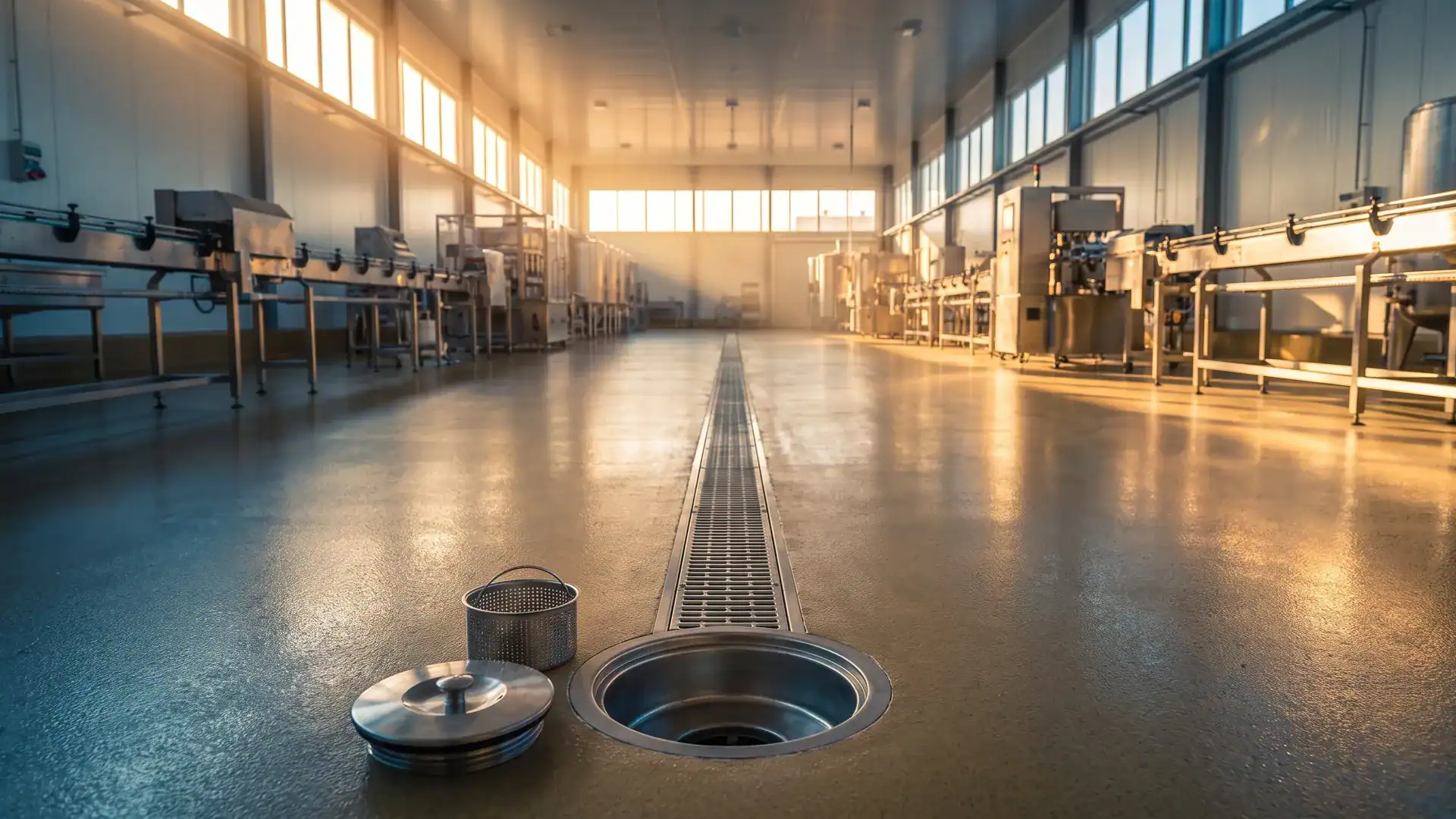
Food Plant Drain Repair Without Breaking Up the Floor
In a food processing plant, production and sanitation routinely send hot water, fats, product waste and cleaning chemicals, including hot caustic, down the drains. Over enough years, that combination wears through older pipe that was not specified for today’s sanitation chemistry. Joints separate, sections sag, and the lines under the production floor start to clog, back up or leak.
When that happens, the plant has a problem that is part maintenance, part food safety and part production. Standing water and slow drains are the kind of thing an auditor notices. Backups during a shift stop the line. And the drains themselves are buried under the one surface nobody wants to break: a sanitary floor that took a shutdown to install.
The traditional fix makes the problem worse before it makes it better. Breaking out the floor to replace a drain line means saw-cutting and jackhammering in the middle of a food plant, containing the dust and debris, replacing the pipe, then pouring and curing new concrete and recoating it before production can return. It is the kind of job that turns a plumbing repair into a plant-wide event. Each day that section of floor is torn up is a day it is not producing, and in many plants that area cannot simply be worked around.
Food plant drain repair from the inside avoids most of that. The existing drain stays where it is. It is cleaned and lined in place, with a camera inspection first where the line’s condition is not known, working through the drains and cleanouts the plant already has, and often the floor above it stays intact.
That approach is industrial trenchless pipe repair, and it fits the way food and beverage plants and other manufacturing sites actually run: tight production schedules, sanitation windows measured in hours, and very little tolerance for construction on the production floor.
Why Food Plant Drains Wear Out
Process drains in a food plant face conditions ordinary building drains rarely see in combination. A few of the reasons they wear faster than ordinary building drains:
- Heat. Washdown and sanitation water goes down the drain hot, cycle after cycle, which stresses pipe and joints.
- Fats and product waste. Grease and solids build up inside the line and narrow it.
- Cleaning chemicals. Caustic and acid cleaners do their job on equipment, then keep working on the drain.
- Age. Many plants are running drain systems installed long before the current production rate, product mix or sanitation program.
None of this happens overnight. It often shows up as a drain that runs slower over time, until one day it stops draining altogether, often at the worst possible time.
Hill Services brings two things to this work: a commercial and industrial plumbing division that works at facility scale rather than residential, and lining crews that line drain lines in place, typically in days, where an excavation can run for months. Food processing is among the industries the company serves.
Where the line’s condition is not known, the first step is seeing it. Main line video inspection shows where the line has separated, where it is deformed, where buildup is closing the bore, and which sections are sound. That keeps the repair to the parts that need it and gives the plant a real scope instead of a guess.
For plants across the Mid-South, the plumbing crews work out of Hill’s Memphis headquarters, where the company has operated since 1923.
Inspect, Clean, Then Line
Once the condition is known, the repair follows a simple sequence. The line is cleaned, removing the grease, solids and scale so the inside of the pipe is ready for a liner. Then a new pipe is formed inside the old one, sealing the joints and cracks and giving the drain a smooth, jointless interior with fewer places for buildup to catch. Because the section is restored along its length, the plant is not trading one failed joint for the next one a few feet downstream.
What the plant notices is what does not happen. Often there is no saw-cutting through the sanitary floor, no concrete dust in a food environment, and no waiting for new concrete to cure before the coating can go down. Much of the work happens through existing access points, and it can be planned into scheduled downtime measured in days, not months.
The result is a sealed, restored drain line running under a floor that often never had to come up at all.
Fewer Surprises at the Next Audit
The benefit outlasts the repair. A lined drain with a smooth, continuous interior gives buildup fewer places to catch, so it is less likely to keep returning to the sanitation team’s list. Post-lining CCTV inspection can also give the plant a video record of the lined sections.
Good work also travels inside a company. Hill has seen that pattern with a national food processor, where one successful job led to calls from several of its other facilities.
Planning the Repair Around Production
The best time to address a food plant’s drains is before the backup that shuts a line down. A camera survey of the main process drains, done during scheduled downtime, shows which lines are in the worst condition and which are still sound. The worst ones can then be scheduled into planned downtime.
Done that way, the repair fits the production calendar instead of interrupting it, and the floor often stays as it is. The maintenance and sanitation teams get one plan in place of a running fight with the same drains.
How Hill Services Approaches This
Hill Services runs a camera survey when a line’s condition is unknown, cleans and lines failing sections from the inside, and schedules the work around production rather than the other way around. To discuss fixing process drains without breaking up the production floor, request an estimate or call Hill Services at (901) 388-7500.