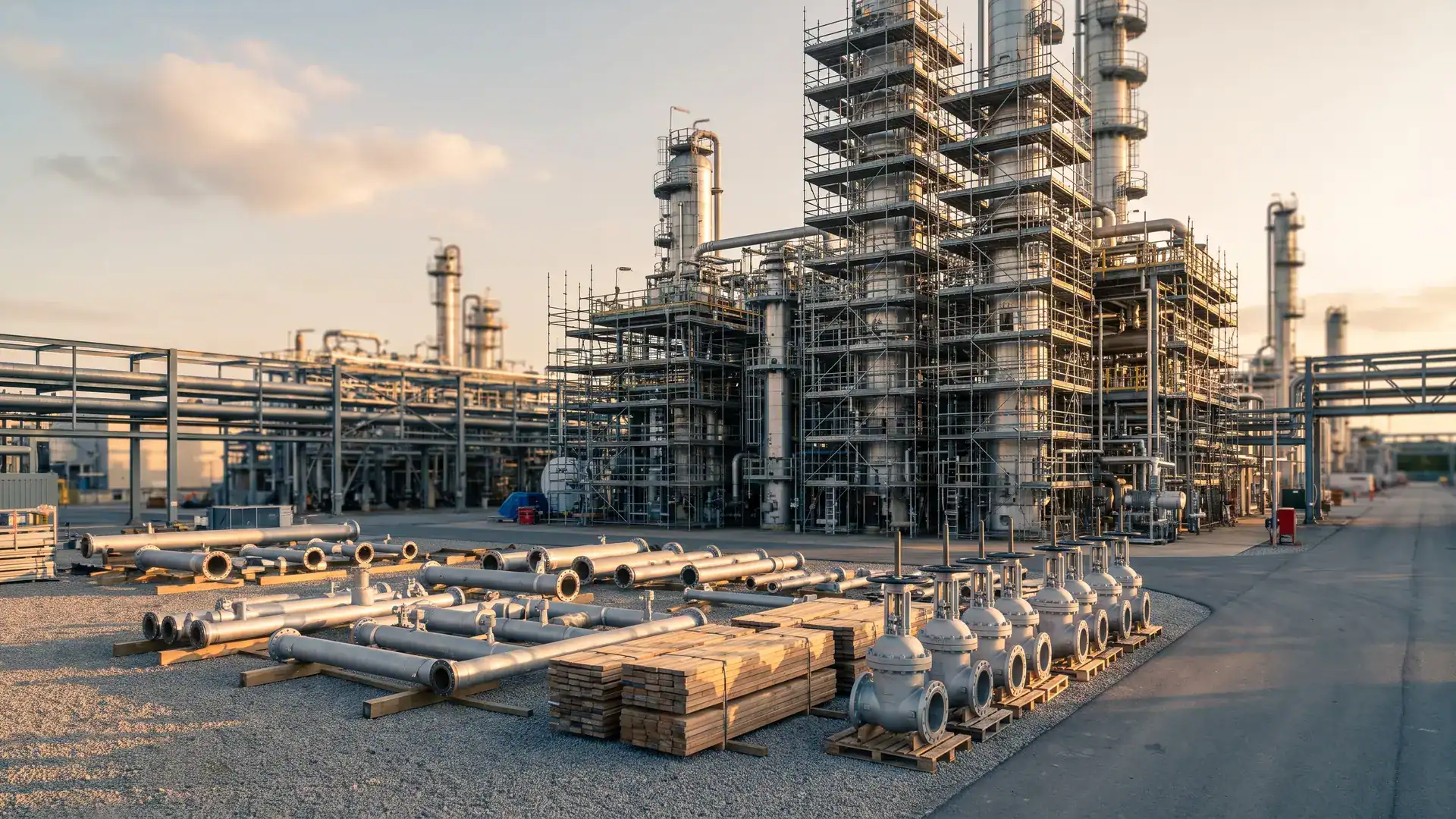
Pipeline Repair During a Plant Turnaround Uses Downtime Already Planned
A line that starts showing its age in the middle of a run leaves a plant with three choices. Keep it running and watch it. Shut the unit down to fix it. Or carry it to the next turnaround and fix it while the unit is already down.
The third choice is the one that protects production. Pipeline repair during a plant turnaround uses an outage the operator already scheduled and already accepted in lost throughput, so the repair takes nothing extra off the production plan. That only works if the repair fits inside the window. And it only works if somebody put the line on the work list in time.
For the maintenance planner building next year’s scope, that changes the question. It is no longer whether the line can wait another year. It is whether the repair can be ready for the window, and that gets decided many months before anyone erects scaffolding around the unit.
Plant teams often know which lines are aging. Inspection reports say so. What operators rarely do is take a unit down just to fix a line, which is why the turnaround matters so much for refinery pipeline repair in Houston and for plant piping generally. For many lines, it is the one realistic chance to make the repair on the plant’s terms.
The other half is the method. Hill Services rehabilitates plant lines from the inside for refineries and chemical plants in the Houston area and along the Gulf Coast, working through a small number of access points instead of a trench along the full length of the pipe. That approach, trenchless pipe rehabilitation, is what makes a turnaround repair realistic in the first place.
What Lining Buys Inside a Tight Window
Time is the whole argument. A typical lining job takes four to five days in the field. Replacing the same section by open cut can take three to six months. An excavation measured in months does not fit inside a turnaround. A lining job measured in days usually does.
Short also means predictable, and predictability is what a turnaround runs on. Trades work in sequence, so one job that runs long holds up the crews scheduled behind it. A repair staged from a few access points, with no open trench across the unit, is far less likely to become the job everyone else is waiting on.
Long lines are less of a limit than many planners expect. At a petrochemical facility on the Houston Ship Channel, a crew lined roughly 16,000 feet of discharge line in place in about four weeks, on schedule and under budget, the kind of work Hill’s Gulf Coast operation is built around. Even at that length, the outage was counted in weeks rather than the months a replacement would have taken.
Pressure lines are part of the picture too. Hill Services is the only certified Primus installer for industrial oil and gas in the United States, which puts lining pressure pipe in place within reach for water, gas and product lines under pressure.
What Has to Be Settled Before the Outage
None of this works if the decision gets made in the last quarter before the shutdown. A few things have to be in place well ahead:
- The condition of the line. A camera survey while the line is still in service turns an assumption into a scope, so the price is for the work the line actually needs.
- The method and the material. Liners are manufactured to the line’s dimensions. The choice has to be made early enough for the material to be on site before the unit comes down.
- Access and tie-ins. Where the crew gets into the line, and who owns each tie-in, settled on paper rather than on the first morning of the outage.
- The contractor’s approval. Getting a contractor approved into a facility’s systems takes time that cannot be made up later.
The Calls That Come Too Late
That last item is where a lot of turnaround repairs are lost.
Hill Services often hears from plants a quarter or less before the shutdown. By then the work list is set, and there is no time left to get a new contractor approved at the site, however good the method is. The line goes back into service unrepaired.
Planning cycles explain why. On a large turnaround, the scope is commonly frozen around a year before the work begins, and anything added after that has to fight its way in as emergent work. For a contractor not yet approved at a facility, the company plans on starting at least 18 months before the shutdown.
Miss the window, and the line runs another cycle. If it fails before the next outage, the repair happens on the worst terms available: unplanned, rushed, and with production stopped for that line alone. That is the cost a turnaround repair avoids.
Getting the Line Onto Next Year’s Work List
The fix is mostly timing. A line flagged in this year’s inspection report can be lined in next year’s turnaround if the decision is made while the work list is still open. That means a camera survey, a method chosen for what the line carries, and a contractor approved before scope freeze rather than after it.
Done that way, the repair takes days inside downtime the plant had already planned, and the line comes back into service with the rest of the unit. The repair behaves like the rest of the work list: scoped, priced, staged and finished inside the window, with nothing left over for the next outage to absorb.
How Hill Services Approaches This
Hill Services does recurring turnaround work at steel mills, chemical plants and refineries in its core Mid-South markets, and it offers to put a camera through the line before the work is priced, so the scope reflects the line that is actually there. To discuss fixing a line inside an upcoming turnaround, request an estimate or call Hill Services at (901) 388-7500.