Terminal Pipeline Rehabilitation When the Deadline Is a Ship
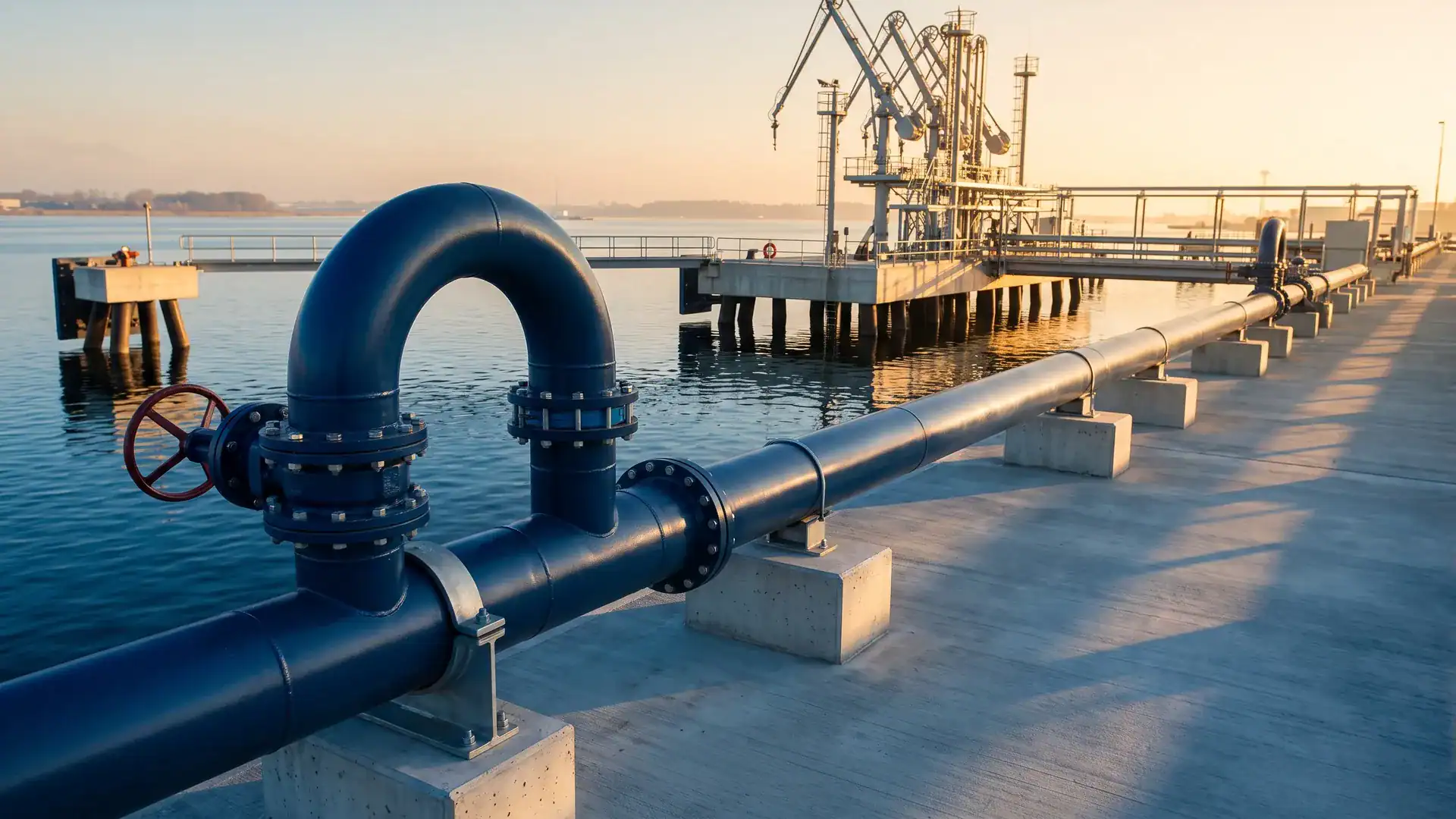
At a marine fuel terminal in Central America, a 10-inch line carrying refined product needed rehabilitation. The hard part was not the pipe. It was the calendar. Vessels were scheduled to berth on fixed dates, and the line had to be back in service before the next one arrived. Nobody at the terminal could move that date, and nobody on the contractor side could either. Terminal pipeline rehabilitation on a schedule like that is a test of planning more than a test of pipe.
That is a different kind of deadline from a maintenance window. A turnaround date can slip a few days if the plant decides it should. A ship’s schedule does not care. Miss it and the terminal is not just late; it is paying for a vessel that cannot load, or turning away product it was counting on.
Full replacement was never an option on that timeline. Excavating and relaying a product line along a working berth is a job measured in months, not days, and the terminal had days. What the operator needed was a way to restore the line in place, inside the gap between vessels, with no chance of the work still running when the next ship came alongside.
Working as the trenchless pipeline rehabilitation contractor on the job, Hill Services lined 2,200 feet of the 10-inch line in seven working days, with no excavation. The line went back into service on schedule.
The work sits squarely inside the oil and gas pipeline rehabilitation Hill does at terminals, plants and pipeline facilities, where the cost of a late finish is measured in product and vessels rather than in the contractor’s invoice.
What a Fixed Deadline Changes About the Job
A date that cannot move changes how everything ahead of it gets planned. On a normal job, a contractor can absorb a problem by adding a day. On a job tied to a ship, there is no day to add, so the margin has to be built in before the crew ever arrives.
In practice, holding a date like that comes down to a short list:
- Scope settled before mobilization. The condition of the line, the access points and the tie-ins are known before work starts, so the job is not discovering its own scope while the clock runs.
- Materials on site from day one. On a remote or international job, resupply inside a seven-day window is not realistic. If something is needed, it has to be there already.
- A sequence that does not cascade. Steps are ordered so a problem in one does not stall everything behind it, and the schedule keeps a reserve instead of assuming every day goes perfectly.
- One decision-maker on each side. When a question comes up on day four, it gets answered in minutes, not in a meeting.
The international setting is worth one note. Working outside the U.S. adds customs, logistics and distance to the list of things that can go wrong, and it removes the option of calling for a part from down the road. A contractor that can hold a date under those conditions can hold one at a Gulf Coast terminal. Hill works across a wide set of service areas across the U.S., with international project history beyond them.
Why the Method Made the Date Possible
Lining is what turned an impossible schedule into a workable one. Instead of trenching along the berth, the crew worked from a small number of access points and rehabilitated the existing pipe from the inside. The terminal kept its berth, its pipe route and its supports. What it got back was a restored line, in a fraction of the time a replacement would have taken.
That trade matters to any operator whose deadline is set by someone else: a vessel schedule, a customer contract, a regulatory date, a product launch. The question in all of those cases is the same. Can the contractor actually hold the date, or will the job quietly absorb whatever cushion the operator thought it had?
There is a quieter benefit as well. A line lined in place keeps its original route along the berth, so there is no new alignment to engineer and no new supports to set along a working dock. The terminal’s drawings stay accurate, and the berth around the job keeps working. For an operator trying to protect a narrow window, that simplicity is part of what keeps the window narrow.
Seven working days for 2,200 feet is the answer on this job. It is a record of this job, not a promise for the next one. No two lines are the same, and the schedule on any project comes from the line’s condition and access, not from a headline number. But it shows what is possible when the work is planned around the deadline instead of hoping the deadline flexes.
Planning the Work Around a Date That Will Not Move
The operators who come out of a fixed-deadline job well are the ones who brought the contractor in early enough to plan it. That means time to inspect the line, settle access and tie-ins, and get material staged before the window opens. Calling once the window is already short leaves nothing to plan with.
The same lesson shows up at plants planning a turnaround. The date is set long before the work begins, and the contractor who is part of the plan early is the one in a position to hold it.
It also means being honest about what cannot move. If the ship, the contract or the shutdown date is fixed, the scope and the sequence have to bend to fit it, and the contractor needs to say early whether that is possible.
How Hill Services Approaches This
Hill Services plans terminal and pipeline work backward from the date that matters to the operator, settles the scope before mobilizing, and uses lining to restore lines in days where replacement would take months. To discuss rehabilitating a line against a fixed deadline, request an estimate or call Hill Services at (901) 388-7500.